Deepgram Enhanced behind Future AGI's Agent Command Center: what the public record actually shows
A close read of Deepgram's Enhanced STT tier and Future AGI's Agent Command Center gateway, including the documentation gap between the two.
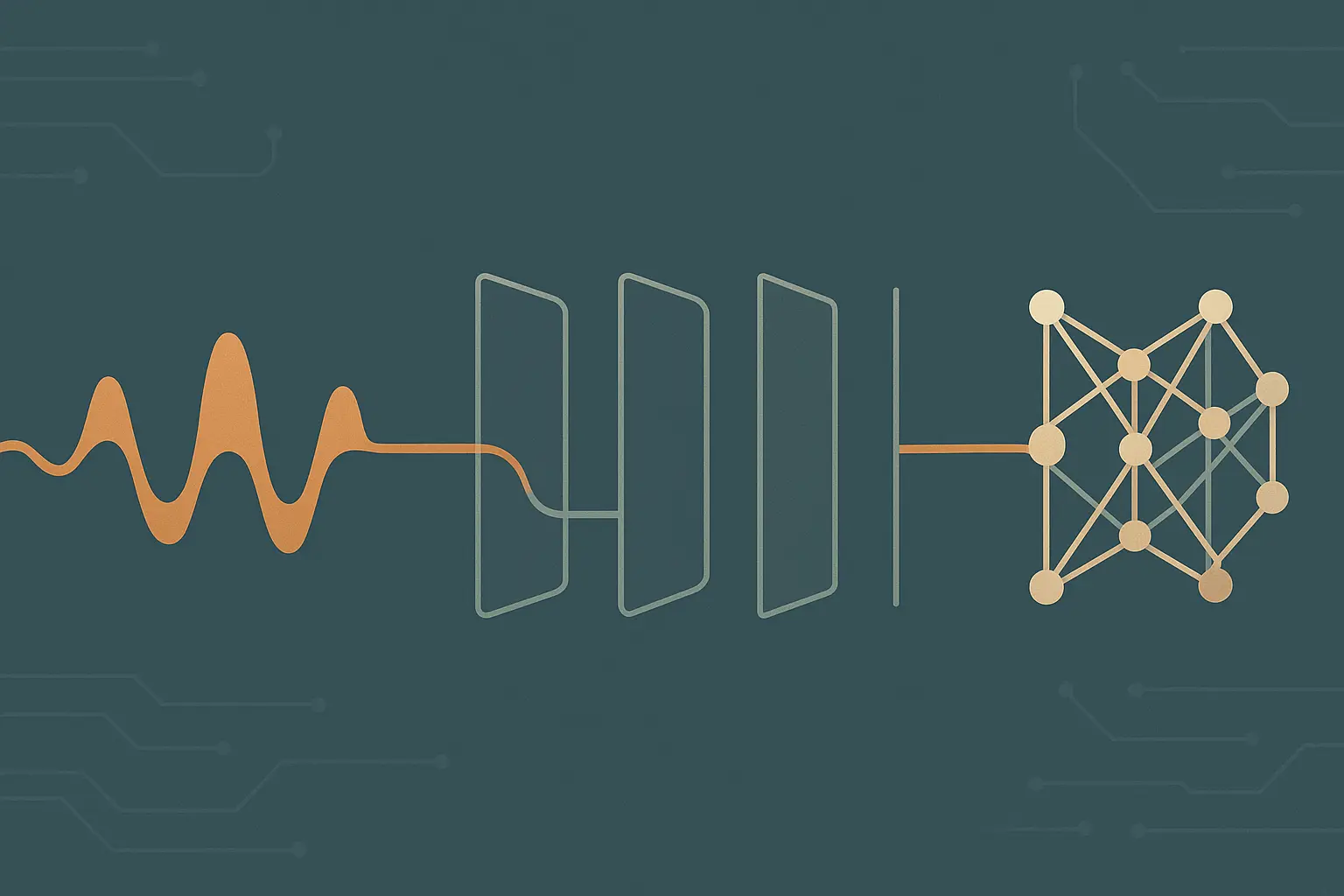
Deepgram's Enhanced is one of the stranger objects in the current speech-to-text market: a model tier launched in May 2022, still listed in Deepgram's docs and rate-limit tables, still routable through third-party gateways, and yet almost invisible in Deepgram's own 2025 and 2026 product story. At launch, Deepgram called it a more accurate ASR tier built on its "next generation End-to-End Deep Learning speech model architecture," claiming 19% higher relative accuracy than the previous model and materially better handling of long-tail vocabulary. Today it survives in variants such as general, meeting, phonecall, and finance while the company's public narrative centers on Nova-3, Flux, and newer speech products. Deepgram does not publicly disclose Enhanced's parameter count, architecture diagram, training corpus size, or model-specific WER benchmarks in any of the sources reviewed here.
On the other side of this pairing sits Future AGI's Agent Command Center, a gateway and control-plane layer between an application and its model providers. The public docs describe a fixed plugin pipeline covering authentication, caching, budgets, guardrails, rate limiting, the provider call itself, cost tracking, and logging. It exposes OpenAI-compatible APIs, per-request metadata headers, Prometheus and OpenTelemetry exports, exact and semantic caching, shadow experiments, and self-hosted deployment. The public code and documentation surface names 15 routing and reliability strategies, though only a subset are fully explained in the formal docs; the rest are named in the open-source gateway README and related pages, with some details left unspecified.
And here is the finding that makes this pairing worth writing about at all: Future AGI's public documentation has a gap around Deepgram specifically. Its provider docs list many cloud and self-hosted LLM providers and expose /v1/audio/transcriptions for Whisper-style STT, yet its public model catalog simultaneously advertises routable model IDs such as deepgram/enhanced, deepgram/enhanced-general, deepgram/enhanced-phonecall, deepgram/enhanced-meeting, and deepgram/enhanced-finance, each described as callable through Agent Command Center with unified observability, caching, fallback, and "15 routing strategies including cost-optimized fallback." The integration is publicly marketed and partially documented, but not yet reconciled with the main provider and API docs.
The defensible conclusion for anyone evaluating this stack: Enhanced is real and routable, but public technical transparency around it is thin. Agent Command Center is a credible gateway layer for routing, observability, and fallback, but the exact Deepgram adapter semantics for Enhanced are not fully specified in the formal docs currently available. If you are an engineering buyer or architect, plan on verification work around provider registration, endpoint translation, media handling, and fallback semantics for audio transcription requests before you bet production traffic on it.
The companies and the people behind them
Deepgram was founded in 2015. Its official company story says the business emerged from machine-learning work on waveform analysis in a dark-matter detector in China. Scott Stephenson, identified by Deepgram as CEO and co-founder, later explored deep learning for audio analysis at the University of Michigan before building Deepgram around end-to-end deep learning. Deepgram's author bio for Stephenson states he earned a PhD in particle physics from the University of Michigan and left a postdoctoral research role to found the company.
Future AGI presents itself as an open-source, end-to-end AI agent engineering platform spanning tracing, evaluation, optimization, protection, and gateway functions. Its founder pages are less formalized than Deepgram's, but public profiles and company pages identify Nikhil Pareek as Founder and CEO, and multiple public profiles and startup directories identify Charu Gupta as co-founder. The same public sources indicate Future AGI was founded in 2024, though the official homepage does not spell out that founding year.
The personnel picture is asymmetrical. Deepgram has a clearer official company-history narrative but relatively little founder detail beyond Stephenson on its official pages. Future AGI has a richer scattered public footprint across blog posts, webinar pages, GitHub, LinkedIn snippets, and interviews, but less of it is consolidated into a single formal leadership page.
| Company | Person | Publicly confirmed role | Bio details visible in reviewed sources | Public profiles | Source |
|---|---|---|---|---|---|
| Deepgram | Scott Stephenson | CEO, co-founder | Deepgram describes him as a dark-matter physicist turned deep-learning entrepreneur; PhD in particle physics, University of Michigan; left postdoc work to found Deepgram. | Deepgram author page; LinkedIn public profile snippet | |
| Deepgram | Other co-founders | Not fully specified in official pages reviewed | Deepgram's official story references "Scott Stephenson and his teammate" but does not name the teammate on the pages reviewed. | Unspecified in official material reviewed | |
| Deepgram | Andrew Seagraves | VP of Research | Official Deepgram byline identifies him as VP of Research; additional biography details were not published on the page reviewed. | Deepgram article byline | |
| Future AGI | Nikhil Pareek | Founder & CEO | Public profiles describe him as Founder/CEO; Forbes profile says he has about a decade in AI, a prior exit, and this is his second funded startup; a founder interview says his first job involved autonomous agents for drones. | LinkedIn; Forbes Council profile; Cerebral Valley interview | |
| Future AGI | Charu Gupta | Co-founder | Public profiles and a founder story describe her as co-founder with 15+ years of business scaling experience. | LinkedIn public profile snippet; founder story | |
| Future AGI | N.V.J.K. Kartik | Founding Engineer | Public LinkedIn snippet identifies him as Founding Engineer at Future AGI; education listed as IIIT Dharwad. Official webinar page says he "ships the routing and caching surface" of Agent Command Center. | LinkedIn; Future AGI webinar page | |
| Future AGI | Rishav Hada | Senior Applied Scientist | Official Future AGI webinar page says he leads the guardrails segment; multiple Future AGI research/blog pages identify him as Senior Applied Scientist. A personal site describes him as a Mila graduate researcher focused on reliable ML systems. | Future AGI blog/webinar pages; personal site | |
| Future AGI | Nikita Sklyarov | Technical Lead | Public LinkedIn snippet describes him as Technical Lead building agentic AI systems; more detailed background was not specified in the reviewed official sources. | LinkedIn public snippet |
Why Enhanced exists and what Deepgram has actually disclosed
Deepgram's explanation for building newer speech tiers is consistent across its 2022 materials. End-to-end deep learning made STT more flexible than traditional pipelines because Deepgram did not have to separately reconnect and re-optimize acoustic, pronunciation, and language models after each change. That made it easier to retrain and improve models without starting over. Deepgram positioned Enhanced explicitly as the middle tier between Base and custom-trained models: better out-of-the-box quality than Base, without the cost and effort of full custom model training.
The market need shows up clearly in Deepgram's keywording guidance. Some teams cannot justify custom training but still need stronger recognition of uncommon or long-tail terms. For those teams, Enhanced was the recommended step up because it had an increased effective vocabulary and handled infrequent words significantly better than lower tiers. That tradeoff matters for how you read the product. Enhanced was never pitched as universal frontier ASR. It was a practical tier for organizations that need better domain-term recall without committing to a custom-training program.
On the technical side, the strongest official statement remains the launch announcement: Enhanced is "based on our next generation End-to-End Deep Learning speech model architecture," with 19% higher relative accuracy than the previous model, better word recognition, and stronger long-tail vocabulary handling. Deepgram also warned customers that model upgrades can change transcript outputs, and recommended side-by-side testing with features such as keywords before production rollout.
What is not publicly specified is just as important. In the official sources reviewed, Deepgram does not disclose Enhanced's parameter count, its training data size, its architecture family beyond "next generation end-to-end deep learning," its serving topology, latency-to-first-token, official WER on named datasets, or any competitor tables specific to Enhanced. By 2025 and 2026, Deepgram's public benchmark language had moved on to Nova-2, Nova-3, and Flux.
Where Enhanced sits in Deepgram's model lineup
| Model/tier | Official positioning | Public architecture/training disclosure | Public accuracy disclosure | Public options noted | Service limits visible in docs | Source |
|---|---|---|---|---|---|---|
| Base | Cost-effective tier on Deepgram's end-to-end STT architecture | Built on Deepgram's "signature end-to-end deep learning" architecture; no detailed model card on reviewed page | No headline WER on reviewed page | general, meeting, phonecall, voicemail, finance, conversationalai, video | Enhanced/Base/Nova families share concurrency tables in current limits docs | |
| Enhanced | Higher-accuracy tier above Base | "Next generation End-to-End Deep Learning speech model architecture"; no parameter count or dataset card publicly disclosed | 19% higher relative accuracy vs prior model; improved long-tail vocabulary | general, meeting beta, phonecall, finance beta | Starter/Growth/Enterprise concurrency tables list Enhanced for both pre-recorded and streaming | |
| Nova | Predecessor to Nova-2 | Docs say training spanned 100+ domains and 47B tokens | No single WER figure on the model page excerpt reviewed | general, phonecall | Same concurrency table family | |
| Nova-3 | Current flagship general ASR | Deepgram's current benchmark and product pages emphasize it; formal architecture details still limited in docs reviewed | 6.84% median WER streaming, 5.26% batch; Deepgram claims 54.3% and 47.4% relative reductions vs competitors | General-purpose current flagship | Current rate limits list Nova-3 prominently | |
| Flux | Conversational streaming ASR with turn detection | Positioned as latest-generation streaming/conversational model | Independent Coval validation cited by Deepgram for latency/turn-taking; not directly an Enhanced successor | Conversational/turn-based experiences | Current limits list Flux streaming separately |
Inputs, outputs, and throughput for Enhanced
Enhanced is exposed through Deepgram's standard STT interfaces rather than a bespoke API. Pre-recorded STT uses the /v1/listen family and accepts audio and video inputs, with JSON responses for transcription results or a request ID for callback and asynchronous paths. Streaming uses WebSockets and supports standard streaming controls plus transcript options such as sample rate, smart formatting, diarization, and interim versus final results, along with the supported audio encodings. Deepgram's docs state support for 100+ audio formats and encodings overall.
Current Deepgram rate-limit docs still list Enhanced for concurrency. On starter-like limits in the North America and Europe tables, Enhanced is shown at up to 50 concurrent pre-recorded requests and up to 150 concurrent streaming requests, rising on Growth and Enterprise plans. Those numbers are service limits, not intrinsic model throughput measurements, but they are the most concrete concurrency figures publicly visible for Enhanced.
Deepgram also makes broader performance claims that give some context, though not specifically for Enhanced. Its 2022 materials described the use-case models as able to transcribe one hour of pre-recorded audio in about 30 seconds, and a 2022 G2-oriented post described Deepgram real-time streaming as having less than 300 ms of lag. Treat both as family-level or platform-level marketing claims rather than Enhanced-only measurements.
Inside Agent Command Center
Future AGI describes Agent Command Center as a single OpenAI-compatible gateway between the client application and upstream providers. The architecture docs say each request passes through a fixed-order plugin chain: IP ACL, authentication, RBAC, cache lookup, budget checks, guardrails, tool policy, validation, and rate limiting before the provider call. The response then continues through cost tracking and logging. Cache hits can short-circuit the provider call entirely.
The integration value of routing Deepgram Enhanced through this gateway is not "making Enhanced exist." It is wrapping Enhanced in a standard control plane: virtual keys instead of raw provider keys, per-call metadata, cache controls, cost headers, routing and fallback behaviors, OpenTelemetry and Prometheus observability, and shadow experiments. Future AGI's public Deepgram model pages say that calling models such as deepgram/enhanced-general through Agent Command Center returns metadata on x-agentcc-* headers including provider, cost, latency, cache hit, and request ID.
There is a caveat worth sitting with. Agent Command Center's provider docs enumerate OpenAI, Anthropic, Gemini, Bedrock, Azure, Cohere, Groq, Mistral, Together, Fireworks, DeepInfra, Perplexity, Cerebras, xAI, OpenRouter, Hugging Face, Anyscale, Replicate, and several self-hosted backends. They do not mention Deepgram. At the same time, Future AGI's Deepgram model catalog advertises 36 Deepgram models, including the Enhanced variants, as routable through Agent Command Center. That likely means one of three things: the public provider docs lag the catalog, the catalog uses an internal or generic adapter path that is not fully documented, or the calculator and catalog surface is ahead of the formal endpoint docs. The public sources reviewed do not resolve which.
The request pipeline described in the architecture docs, combined with the publicly advertised Deepgram catalog integration, gives a coherent picture: plugin order and telemetry and caching semantics come from official docs, while the Deepgram target path comes from Future AGI's Deepgram model pages.
The 15 routing strategies, and how well each is documented
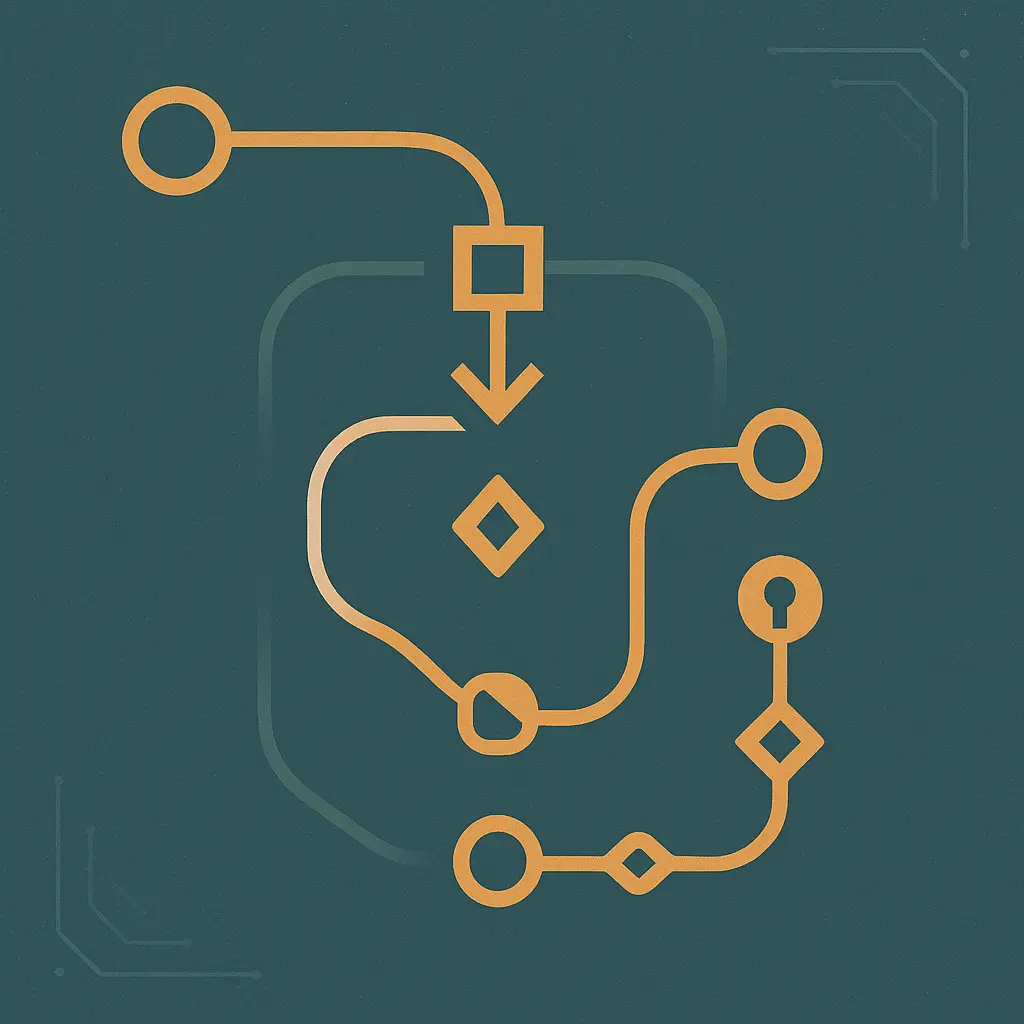
Future AGI's public README names 15 routing and reliability strategies exactly as follows: roundrobin, latency, costopt, adaptive, complexity, conditional, providerlock, accessgroups, race/hedged, mirror/shadow, modelfallback, failover, circuitbreaker, retry, healthmonitor. The formal routing docs fully explain only a subset. Where the public algorithm is not described, the table below marks it accordingly.
| Strategy | What the public docs support | Detail level in public docs | Source |
|---|---|---|---|
| Round robin | Evenly rotates traffic across providers; default example strategy | Fully specified | |
| Weighted | Splits traffic by assigned weights | Fully specified | |
| Least latency | Routes to fastest provider using recent response times | Fully specified | |
| Cost optimized | Chooses cheapest provider supporting the requested model | Fully specified | |
| Adaptive | Dynamically adjusts weights using real-time performance | Fully specified at high level | |
| Complexity-based | Scores requests on 8 signals and maps them to a model tier | Fully specified at high level | |
| Conditional | Docs/config mention "conditional routing rules"; exact rule language is not fully documented on the pages reviewed | Partially specified | |
| Provider lock | README names it; likely forces/pins a request to a chosen provider for compliance or policy reasons, but exact semantics were not publicly documented in reviewed pages | Named only | |
| Access groups | Public docs explain access groups as logical sets of models/aliases for policy management | Partially specified | |
| Race / hedged | README names hedged/race requests; implies parallel or near-parallel upstream calls to reduce tail latency, but exact policy knobs were not documented in reviewed pages | Named only | |
| Mirror / shadow | Shadow experiments mirror a sampled portion of production traffic to a target model/provider without affecting users | Well specified | |
| Model fallback | Per-model ordered fallback chains; e.g., if one model fails, try alternatives in sequence | Fully specified | |
| Failover | Triggers on 429, 5xx, timeouts, and connection errors; routes to backup provider list | Fully specified | |
| Circuit breaker | Opens on repeated failures, then half-opens for recovery probes | Fully specified | |
| Retry | Exponential backoff with configurable retry counts and backoff windows | Fully specified | |
| Health monitor | Public provider-health docs describe continuous health tracking plus cooldown/probe-based reentry | Partially specified |
The routing and fallback flow that emerges from these docs, taking in the plugin order, cache behavior, failover, retry, circuit-breaker logic, and shadow experiments, is a synthesis of public documentation rather than a copied vendor diagram.
Observability, caching, APIs, and deployment
The observability surface is the strongest part of the documentation. Future AGI says every request is logged with request ID, trace ID, session ID, model requested versus model actually used, provider, token counts, cost, latency, cache status, guardrail results, and fallback or error events. The same docs state that the gateway exports metrics to Prometheus and traces to OpenTelemetry, and that users can propagate their own trace IDs via request headers.
Caching is server-side and supports exact and semantic strategies. Public docs describe configurable TTL, namespaces, LRU eviction, force-refresh, and Cache-Control: no-store. The open-source README states support for 6 exact-cache backends (mem, redis, disk, s3, gcs, azblob) and 4 semantic-cache backends (mem, pinecone, qdrant, weaviate).
On APIs and SDKs, the formal docs present Agent Command Center as OpenAI-compatible, with endpoints including /v1/chat/completions, /v1/embeddings, /v1/audio/transcriptions, /v1/audio/speech, /v1/images/generations, and /v1/responses. Future AGI publishes a dedicated client SDK repository for Python and TypeScript, while the control-plane and gateway service itself lives in the broader platform monorepo.
Deployment options are a hosted gateway, Docker, and Go-binary self-hosting. The self-hosted docs say Agent Command Center ships as a Go binary and Docker image, can run from a simple config.yaml, and is intended to keep requests fully inside the customer's infrastructure for data residency and network-topology control. The README adds that clustering and HA use Raft-based clustering, and that official Kubernetes manifests and Helm charts were "coming soon" at the time of the README snapshot reviewed.
For security, the gateway relies on virtual API keys, encrypted storage of provider credentials, RBAC, rate limits, budget controls, IP allowlists, and append-only audit logging per the open-source README. The docs also emphasize that prompts and completions are not stored by default; caching is opt-in and configurable per organization.
Benchmarks, code, and patents
The numbers that exist, and what they actually measure
| Scope | Figure or claim | What it means | Caveat | Source |
|---|---|---|---|---|
| Deepgram Enhanced launch | 19% higher relative accuracy vs previous model | Official launch claim for Enhanced tier | No public WER table or named benchmark dataset in reviewed source | |
| Deepgram long-tail vocabulary | "Increased effective vocabulary," better handling of uncommon words | Product rationale for Enhanced | Qualitative claim, not benchmarked in reviewed docs | |
| Deepgram family speed | One hour of audio in ~30 seconds; <300 ms real-time lag | Historical Deepgram platform-level speed claims | Not Enhanced-specific and partly older marketing | |
| Deepgram Nova-3 | 6.84% median WER streaming; 5.26% batch | Current official flagship benchmark | Applies to Nova-3, not Enhanced | |
| Future AGI gateway throughput | ~28,889 req/s on 4 vCPU / 16 GB t3.xlarge profile | Gateway throughput under mock-upstream benchmark | Measures gateway overhead, not upstream model latency | |
| Future AGI gateway latency | P95 2.8 ms at ~1k RPS; full chat proxy ~66 µs internal wall time | Fast gateway/control-plane overhead | Self-published benchmark against mock upstream | |
| Independent STT critique | 44% average transcription error on spoken U.S. street names across evaluated top-provider models | Real-world high-stakes error failure mode | Not Enhanced-specific; cross-provider study | |
| Independent accent critique | Deepgram and peers vary materially on non-native accented English | Highlights robustness gaps beyond headline WER | Not Enhanced-specific | |
| Independent audit critique | Standard ASR audits can understate weakness for aphasia speakers | Quality varies by speech type and evaluation method | Not Enhanced-specific |
Open-source code and reproducibility
Deepgram publishes official developer SDKs and playground tooling for its STT, TTS, and voice APIs. The docs point to the API Playground, JavaScript SDK, and getting-started guides for pre-recorded and live transcription. That is useful for reproducing functional API behavior, but not for reproducing Enhanced's model training or benchmark internals.
Future AGI's public code surface is more explicit on reproducibility. The future-agi/future-agi monorepo includes the agentcc-gateway README and benchmark harness, while future-agi/agent-command-center-sdk publishes client SDKs. future-agi/traceAI is an Apache 2.0 tracing layer built on OpenTelemetry. The gateway README says benchmark configs, commands, and mock-upstream harnesses are committed under bench/, with go test -bench and bench/run.sh reproduction instructions.
Patents and IP
Deepgram's January 2026 Series C press release says the company expanded its patent portfolio and specifically cites US 12,499,875 for "Deep Learning Internal State Index-Based Search and Classification," framing it as protection for techniques that leverage internal neural representations for large-scale audio search and classification. USPTO patentee indexes also show Deepgram assignee entries for "Hardware efficient automatic speech recognition" (granted June 2025) and "End-to-end automatic speech recognition with transformer" (granted August 2025). These patents matter because they point to Deepgram's twin emphases on inference efficiency and end-to-end ASR modeling, even though they do not amount to a public model card for Enhanced.
Primary sources worth reading directly
| Type | Item | Why it matters | Source |
|---|---|---|---|
| Official launch note | Deepgram Enhanced launch changelog, May 26 2022 | Primary source for Enhanced's 19% relative-accuracy claim and next-gen E2EDL positioning | |
| Official model docs | Deepgram model options page | Current documentation that Enhanced is still listed, with available options | |
| Official product rationale | Deepgram article on model selection and keyword boosting | Explains why Enhanced sits between base and custom models, especially for long-tail vocabulary | |
| Official architecture docs | Future AGI Command Center Architecture | Primary source for request pipeline, plugin order, caching short-circuit, and multi-tenant virtual keys | |
| Official routing docs | Future AGI Routing, Failover, and Load Balancing | Primary source for round-robin, weighted, least-latency, cost-optimized, adaptive, failover, retries, circuit breaker, and complexity routing | |
| Official observability docs | Future AGI Observability, Cost Tracking, Caching, Shadow Experiments | Primary sources for unified observability, headers, shadow traffic, exact/semantic cache, and budget/cost telemetry | |
| Open-source gateway README | future-agi/future-agi agentcc-gateway/README.md | Primary source for the 15-strategy list, benchmark numbers, cache backends, and deployment posture | |
| Official Deepgram history/about | Deepgram About + Scott Stephenson author page | Primary source for Deepgram origin story and founder bio | |
| Patent/press source | Deepgram Series C press release and patent indexes | Evidence of recent granted patents and strategic IP emphasis | |
| Independent academic paper | "How Speech Models Miss What Matters Most" | Strong cautionary evidence that real-world high-stakes speech failures remain common |
What could go wrong, and what stays private
The most important limitation is simple: Enhanced has no public modern model card in the reviewed sources. There is no official public disclosure of parameter count, context window, architecture diagram, training corpus composition, latency distribution, or a named benchmark suite for Enhanced specifically. Future AGI's public Deepgram calculator pages reinforce this absence by repeatedly marking pricing, context window, and benchmarks for Enhanced variants as not currently public or pending.
The second limitation is the documentation ambiguity in the gateway integration itself. Future AGI's formal provider docs do not document Deepgram as a provider, and the primary API reference still frames /v1/audio/transcriptions in Whisper and OpenAI-compatible terms. Meanwhile, the Deepgram cost-calculator pages clearly market Enhanced models as callable through Agent Command Center using model IDs such as deepgram/enhanced-general. Architects should treat the integration as credible but incompletely documented, not as contract-grade interface documentation.
There are broader ASR reliability concerns that apply regardless of the gateway question. Independent research shows that speech systems from top providers, including Deepgram, can still fail badly on short high-stakes utterances, non-native accented English, aphasia speech, and other off-benchmark conditions. That does not prove Enhanced is uniquely weak, but it does mean any "best-in-class STT" claim is dataset and workload dependent. Deepgram itself now publishes multiple pieces advising customers to evaluate against production audio rather than headline WER.
Privacy and compliance sit at the center of any speech stack. Deepgram's trust and self-hosting materials describe hardened systems, RBAC, encryption, SOC 2 controls, HIPAA-compatible offerings for enterprise customers, GDPR readiness with EU data residency, and self-hosted deployments that typically keep audio and transcripts inside customer infrastructure, apart from license validation and usage reporting. Future AGI makes similar control-plane claims around self-hosting, encrypted provider keys, virtual-key isolation, and caching that is optional rather than default. That is a strong operational story on paper. Any production deployment still needs an explicit review of what is cached, what metadata flows out to observability systems, and how long shadow and mirror results are retained.
Timeline and roadmap signals
| Date | Deepgram | Future AGI | Source |
|---|---|---|---|
| 2015 | Deepgram founded | ||
| May 2022 | Enhanced launched; English availability announced | ||
| Oct 2022 | Enhanced support expanded to German | ||
| 2024 | Public sources identify Future AGI as founded in 2024 | ||
| Feb 2025 | Nova-3 launched | ||
| Oct 2025 | Future AGI public roundup highlights open-source stack progress | ||
| Jan 2026 | Deepgram raises $130M Series C at $1.3B valuation; expands patent emphasis; acquires OfOne | ||
| Mar to May 2026 | Deepgram publishes newer benchmark and voice-AI comparison materials; Enhanced still documented but not central | Future AGI publishes multi-model routing comparisons, gateway docs, and Deepgram model catalog pages carrying Agent Command Center routing claims |
Deepgram's roadmap signal is indirect but readable: current marketing and changelog emphasis favors Nova-3, Flux, multilingual expansion, medical specialization, and broader voice-agent stacks over any further public narrative around Enhanced. Enhanced is supported but is no longer the flagship innovation story.
Future AGI's roadmap signal is also indirect. The open-source gateway README says official Kubernetes manifests and Helm charts were "coming soon," and the surrounding 2026 blog and docs ecosystem shows ongoing investment in open-source tracing and evals, gateway breadth, and closed-loop optimization where evaluation outcomes inform routing. That points toward a platform strategy rather than a thin proxy strategy.
What remains unanswered
Several details remain unspecified in the public sources reviewed:
- Enhanced's exact model architecture beyond "next generation end-to-end deep learning."
- Enhanced's training corpus size, data mix, parameter count, and model-card details.
- Public WER and latency benchmark tables for Enhanced versus current competitors.
- A formal Future AGI provider doc page showing exactly how Deepgram is configured under Agent Command Center's provider registry.
- Full public algorithmic descriptions for all 15 Agent Command Center routing strategies, especially providerlock, race/hedged, and some aspects of conditional and healthmonitor.
- A complete official Deepgram founding roster beyond Scott Stephenson on the official pages reviewed.
None of these gaps is disqualifying. But they are the exact places where a proof-of-concept and a production deployment diverge, and where a week of hands-on verification will tell you more than any vendor page.
Sources
- May 26, 2022 changelog, Deepgram Docs: https://developers.deepgram.com/changelog/2022/5/26
- Command Center Architecture, Future AGI Docs: https://docs.futureagi.com/docs/command-center/concepts/core/
- Supported LLM Providers in Agent Command Center, Future AGI Docs: https://docs.futureagi.com/docs/command-center/features/providers/
- Model Options, Deepgram Docs: https://developers.deepgram.com/docs/model
- About Us, Deepgram: https://deepgram.com/about
- Future AGI homepage: https://futureagi.com/
- Scott Stephenson author page, Deepgram: https://deepgram.com/authors/scott-stephenson
- 3 Best Open-Source ASR Models Compared, Deepgram: https://deepgram.com/learn/benchmarking-top-open-source-speech-models
- Nikhil Pareek, Founder & CEO, Future AGI: https://www.linkedin.com/in/nikhil-pareek
- Building the Future of AI: The Story of Charu & Future AGI: https://rizevault.razorpay.com/p/building-the-future-of-ai-the-story
- N.V.J.K Kartik, Founding Engineer at Future AGI: https://in.linkedin.com/in/n-v-j-k-kartik-95283823b
- Modern AI Engineering 2026: Scale LLMs Webinar, Future AGI: https://futureagi.com/blog/webinar-03-modern-ai-engineering/
- Future AGI Goes Open Source, LinkedIn post: https://www.linkedin.com/posts/nikhil-pareek_today-is-the-biggest-day-for-us-at-future-activity-7453090646921285632-C2Sg
- Which Speech Recognition Model is Best for My Business?, Deepgram: https://deepgram.com/learn/best-speech-recognition-model-business
- Everything You Need to Know about Keywords for Speech Recognition, Deepgram: https://deepgram.com/learn/everything-you-need-to-know-about-keywords-for-speech-recognition
- February 12, 2025 changelog, Deepgram Docs: https://developers.deepgram.com/changelog/2025/2/12
- Models & Languages Overview, Deepgram Docs: https://developers.deepgram.com/docs/models-languages-overview
- Pre-Recorded Audio, Deepgram Docs: https://developers.deepgram.com/reference/speech-to-text/listen-pre-recorded
- API Rate Limits, Deepgram Docs: https://developers.deepgram.com/reference/api-rate-limits
- Virtual Keys & Access Control, Future AGI Docs: https://docs.futureagi.com/docs/command-center/concepts/virtual-keys/
- future-agi/agentcc-gateway/README.md at main: https://github.com/future-agi/future-agi/blob/main/agentcc-gateway/README.md
- Agent Command Center Routing, Failover, and Load Balancing, Future AGI Docs: https://docs.futureagi.com/docs/command-center/features/routing/
- Command Center Configuration, Future AGI Docs: https://docs.futureagi.com/docs/command-center/concepts/configuration/
- Shadow Experiments for LLM Traffic in Agent Command Center, Future AGI Docs: https://docs.futureagi.com/docs/command-center/features/shadow-experiments/
- Request Logging and Observability in Agent Command Center, Future AGI Docs: https://docs.futureagi.com/docs/command-center/features/observability/
- LLM Response Caching in Agent Command Center, Future AGI Docs: https://docs.futureagi.com/docs/command-center/features/caching
- Command Center API Reference, Future AGI Docs: https://docs.futureagi.com/docs/command-center/concepts/api-reference/
- Self-Hosted Command Center, Future AGI Docs: https://docs.futureagi.com/docs/command-center/deployment/self-hosted/
- future-agi/agentcc-gateway/README.md (benchmarks): https://github.com/future-agi/future-agi/blob/main/agentcc-gateway/README.md
- "Sorry, I Didn't Catch That": How Speech Models Miss What Matters Most: https://arxiv.org/html/2602.12249v2
- Automatic speech recognition for non-native English: https://arxiv.org/pdf/2503.06924
- Addressing Pitfalls in Auditing Practices of Automatic Speech Recognition: https://arxiv.org/html/2506.08846v1
- Getting Started (Live Streaming Audio), Deepgram Docs: https://developers.deepgram.com/docs/live-streaming-audio
- future-agi/future-agi monorepo: https://github.com/future-agi/future-agi
- Deepgram Raises $130M Series C at $1.3B Valuation: https://deepgram.com/learn/press-release-deepgram-raises-series-c
- Security Policy, Deepgram Docs: https://developers.deepgram.com/trust-security/security-policy
- October 14, 2022 changelog, Deepgram Docs: https://developers.deepgram.com/changelog/2022/10/14
- Future AGI 2026 Company Profile & Team, Tracxn: https://tracxn.com/d/companies/futureagi/__hm7Efd6QN4snsxVe263q04NHF0BRK8IyFBR6b8hrrI4
- Future AGI October 2025: OSS Stack + Vapi: https://futureagi.com/blog/future-agi-october-roundup-2025/
- Introducing Nova-3, Deepgram: https://deepgram.com/learn/introducing-nova-3-speech-to-text-api
- Deepgram Takes #1 in German Speech Recognition: https://deepgram.com/learn/german-benchmarks
- Enhanced General pricing, Future AGI cost calculator: https://futureagi.com/llm-cost-calculator/deepgram/enhanced-general/
Additional primary URLs consulted:
- https://developers.deepgram.com/reference/speech-to-text/listen-streaming
- https://developers.deepgram.com/docs/pre-recorded-audio
- https://developers.deepgram.com/docs/supported-audio-formats
- https://developers.deepgram.com/docs/self-hosted-introduction
- https://deepgram.com/pricing
- https://deepgram.com/learn/coval-validates-flux-no-tradeoff-between-latency-and-interruption
- https://docs.futureagi.com/docs/command-center/
- https://docs.futureagi.com/docs/command-center/features/cost-tracking/
- https://futureagi.com/llm-cost-calculator/deepgram/
- https://futureagi.com/llm-cost-calculator/deepgram/enhanced/
- https://futureagi.com/llm-cost-calculator/deepgram/enhanced-phonecall/
- https://futureagi.com/llm-cost-calculator/deepgram/enhanced-finance/
- https://futureagi.com/llm-cost-calculator/deepgram/enhanced-meeting/
- https://futureagi.com/blog/best-ai-gateways-model-routing/
- https://github.com/future-agi/agent-command-center-sdk
- https://github.com/future-agi/traceai
- https://arxiv.org/abs/2602.12249
- https://patents.google.com/patent/US10540959B1/en
- https://patents.google.com/patent/US12334075B2
- https://www.reuters.com/technology/voice-ai-startup-deepgram-raises-130-million-13-billion-valuation-2026-01-13/